
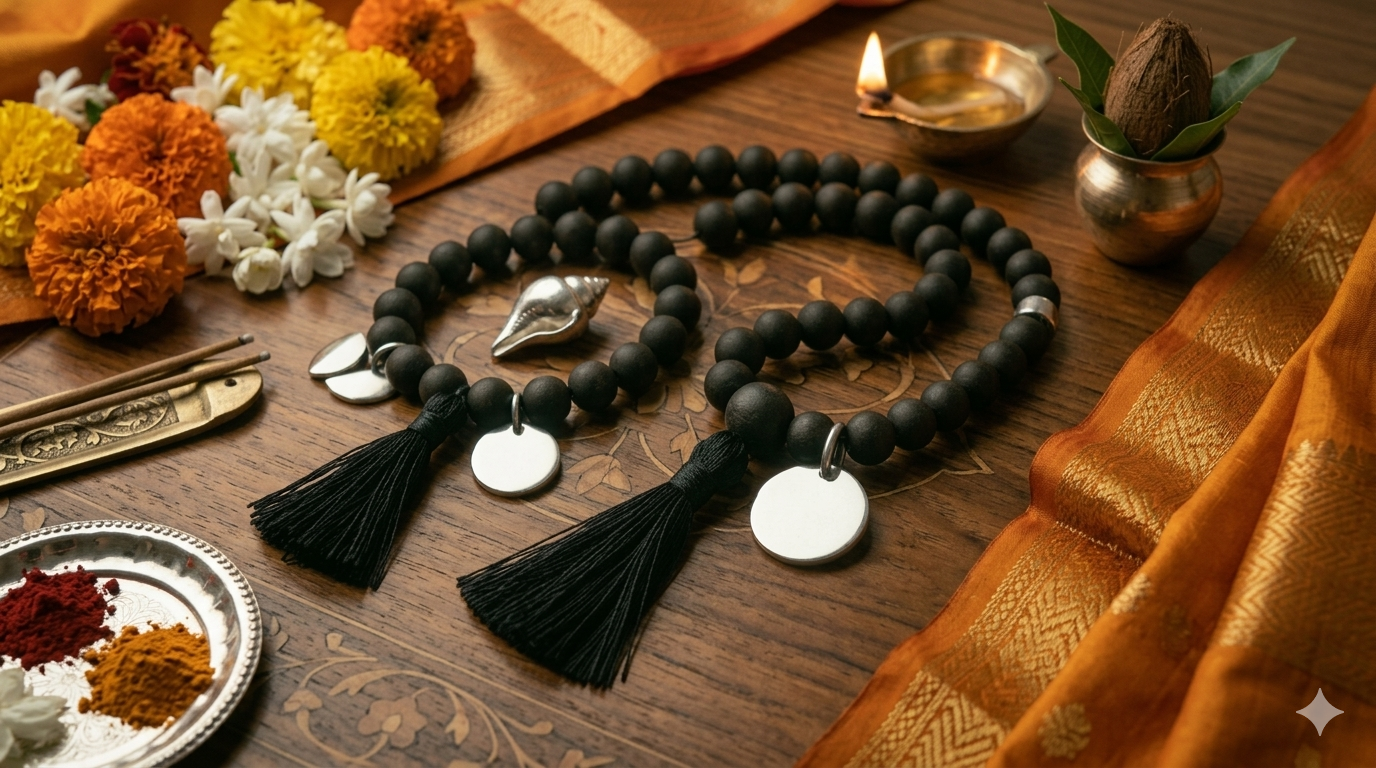
Choosing between a Karungali mala and a bracelet usually comes down to a simple question: how do you actually spend your day? We often get caught up wondering which one is “better,” but both are made from the same ebony wood and carry the same history.
The only real difference is how they fit into your life. Whether you prefer something tucked under your shirt or a small reminder on your wrist, the right choice is simply the one that doesn’t feel like it’s in the way.
Lifestyle vs. Ritual: How Do You Plan to Use It?
Choosing between these two often comes down to your daily habits. One is built for movement, while the other is built for a specific practice.
- The Bracelet (For the Busy Professional): A Karungali bracelet is designed for people on the move. If your day involves typing at a desk, commuting, or constant meetings, a bracelet stays out of the way. It offers a subtle sense of grounding without catching on your sleeves or feeling heavy during a long shift.
- The Full Mala (For Focused Rituals): Traditionally, the 108-bead string is used for breathwork or chanting. Its length allows you to move your fingers from bead to bead, keeping your mind anchored. If you have a dedicated space for meditation or reflection at home, the mala feels right at home there.
Comparing the Specs: Bracelet vs. Mala
|
Feature |
Karungali Bracelet |
Full Karungali Mala |
| Bead Count | Typically 18 to 24 beads | Traditional 108 beads |
| Visibility | Discreet; easily hidden by a watch or sleeve | More prominent; worn as a necklace |
| Best For | Daily wear, work, and exercise | Meditation, home rituals, or deep focus |
| Maintenance | Low; easy to take on and off | Requires care to avoid tangling or snapping |
Why Choose a Karungali Bracelet for Daily Wear?
Many people prefer a karungali bracelet because of where it sits: the pulse point. Traditional beliefs suggest that wearing certain woods on the wrist helps regulate body heat and keeps the nervous system calm. Because the wrist is a high-movement area, you are constantly reminded of your intention every time you see or feel the beads.
The versatility of a karungali mala bracelet is hard to beat. It fits easily into a pocket if you need to take it off, and it doesn’t get in the way of exercise or chores. For someone just starting their journey with Karungali, a bracelet is a low-pressure way to see how the wood interacts with their energy.
But will I miss out on the benefits if I don’t wear the full 108?
This is a common worry, but spiritual growth isn’t a numbers game. While 108 is a significant number for formal practice, the grounding nature of Karungali comes from the wood itself. If wearing a bracelet consistently is easier for you than wearing a mala occasionally, the bracelet will actually be more beneficial. Consistency and skin contact are the real keys here.
When the Traditional Karungali Mala is Irreplaceable
There are times when only a full mala will do. If your primary goal is deep meditation or intensive mantra practice, the weight and length of a mala provide a physical rhythm that a bracelet cannot match.
In South Indian traditions, the Karungali mala is often seen as a protective shield. When worn around the neck, it sits close to the heart and the solar plexus, areas associated with courage and inner strength. For those following a strict spiritual discipline, the 108 beads represent a commitment to the path.
“The mala is a map for your meditation; the bracelet is a reminder of your peace”
Can I wear the mala as a wrap-around bracelet?
You can, but be careful. Most malas are strung on cotton or silk thread designed to hang vertically. Wrapping it tightly around your wrist puts tension on the string, which can cause it to snap over time. If you love the look of a wrapped mala, ensure the thread is durable, but usually, it is better to have a dedicated bracelet for your wrist and keep your mala for your neck or your altar.
FAQS
Is it okay to wear both at the same time?
Yes, many people wear a bracelet for daily activities and keep their mala on for meditation or sleep. There is no conflict in using both.
Should I take off my bracelet when I shower?
It is best to avoid getting the beads wet frequently. Water and soap can strip the natural oils from the ebony wood, making the beads dull or brittle over time.
Does the bracelet need to be on a specific hand?
Traditionally, the right hand is used for spiritual tools, but for general wear and grounding, you can choose whichever wrist feels most comfortable for you.
How do I know if Karungali is real?
Genuine Karungali is very dense and will usually sink in water. It should feel heavy for its size and have a deep, natural black or dark brown colour.
Do I need to “recharge” the beads?
While not a requirement, many people like to keep their beads near a natural light source or a clean altar space to keep them feeling fresh and clear.
Conclusion
Choose the bracelet for daily grounding and protection on the go and the mala for dedicated meditation and traditional practice. The “right” choice is the one you won’t leave sitting on your bedside table. Choose the form that fits your outfit and your activity level.
Whether you choose 108 beads or 24, treat your Karungali with care, and it will serve as a steady companion for years to come.
If you find yourself curious about the heritage of this wood or want to know the best way to keep your beads clean and vibrant, browse through our other guides here on the blog.
